Selling a Self-Storage Facility in Las Vegas
Las Vegas storage is several markets sharing one mailing name: city parcels, unincorporated county towns and master-planned edges. Here is how a direct cash buyer reads a facility in each.
- Buyer
- Direct, cash
- Condition
- Purchased as-is
- Repairs
- None asked of you
- Commission
- None on a direct sale
- Closing
- The date you choose
- Footprint
- Nevada only
First question: whose rules govern the parcel?
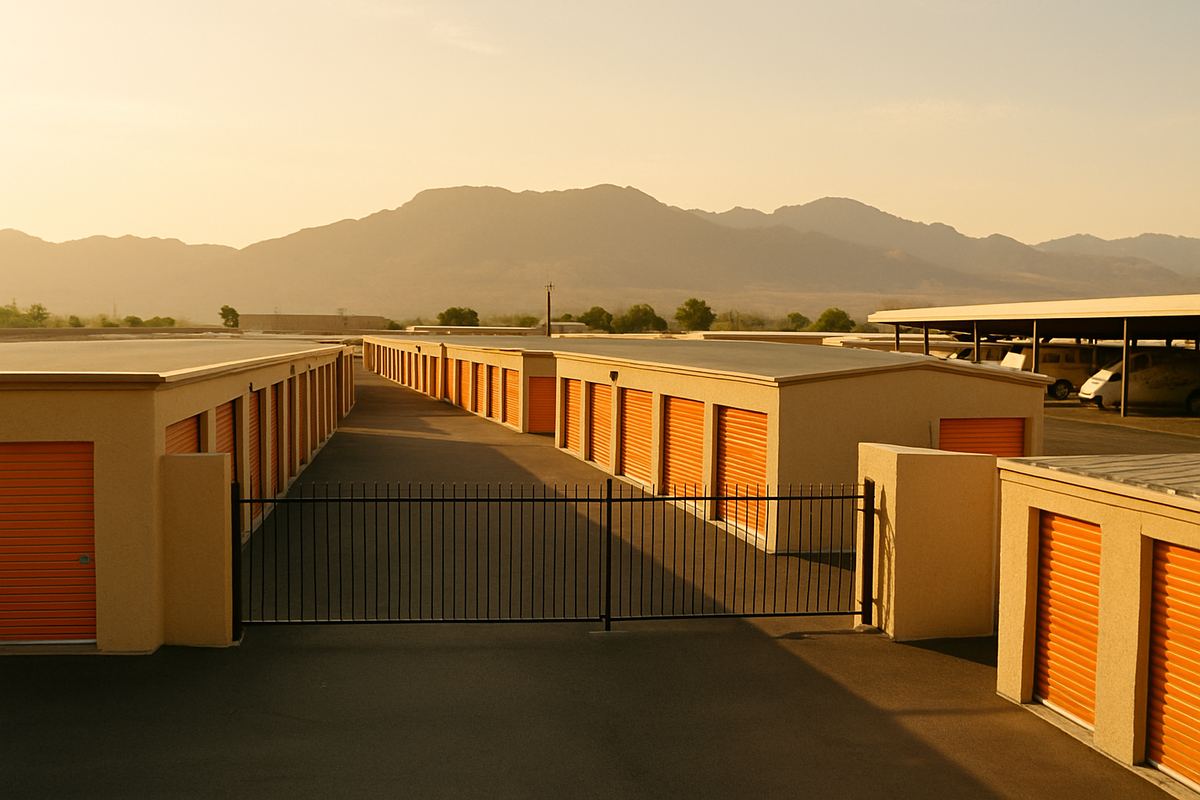
Plenty of owners describe their property as a Las Vegas facility when the land actually sits in Paradise, Spring Valley, Enterprise, Winchester or Sunrise Manor. Those are unincorporated towns run by the Clark County Commission with input from town advisory boards, not by the City of Las Vegas. The address can say Las Vegas while the business license, land-use file and any expansion approvals all live with the county.
Parcels inside city limits
Facilities inside the city answer to city planning and city business licensing. Older sites near the downtown core and along the US-95 corridor often predate current design standards, which matters if a buyer wants to add a building or convert drive-up space to climate-controlled units.
Parcels in unincorporated Clark County
Much of the southwest valley, including the Enterprise area that grew out fast along the southern Beltway, falls under the county. If you hold a vacant pad or a half-finished phase there, the entitlement history is part of what you are selling, which is why we treat entitled pads and unbuilt expansion phases as their own conversation.
Where Las Vegas storage demand comes from
A renter-heavy, shift-working population
Apartment density near the Strip corridor and the hospitality workforce behind it create steady move-in and move-out churn. That churn is good for occupancy and hard on collections, so buyers look closely at the delinquency report and at how consistently the lien process has been followed under Nevada's storage lien statute.
Master-planned edges and HOA parking rules
On the western rim, Summerlin grew from land Howard Hughes acquired in 1952 and now wraps the Beltway near Red Rock. Communities with homeowner associations commonly restrict trailers and boats in driveways, which sends that equipment into covered parking and outdoor yards. If your property leans that way, the notes on selling an RV and boat storage yard apply directly.
Put the Facility in Front of a Direct Buyer
Send the address and whatever basics you have on hand. We read it, call with a handful of questions about the operation, and only after that talk about price. Sending this does not commit you to anything.
Handy to have nearby, though nothing is required to begin:
- Approximate unit count and the mix of sizes
- A recent rent roll or occupancy report
- The last twelve months of income and expenses
- Which management software and gate system the site runs
Would rather talk it through? The red TALK TO ALEX button connects you to our line.
Desert heat, dust and monsoon wear
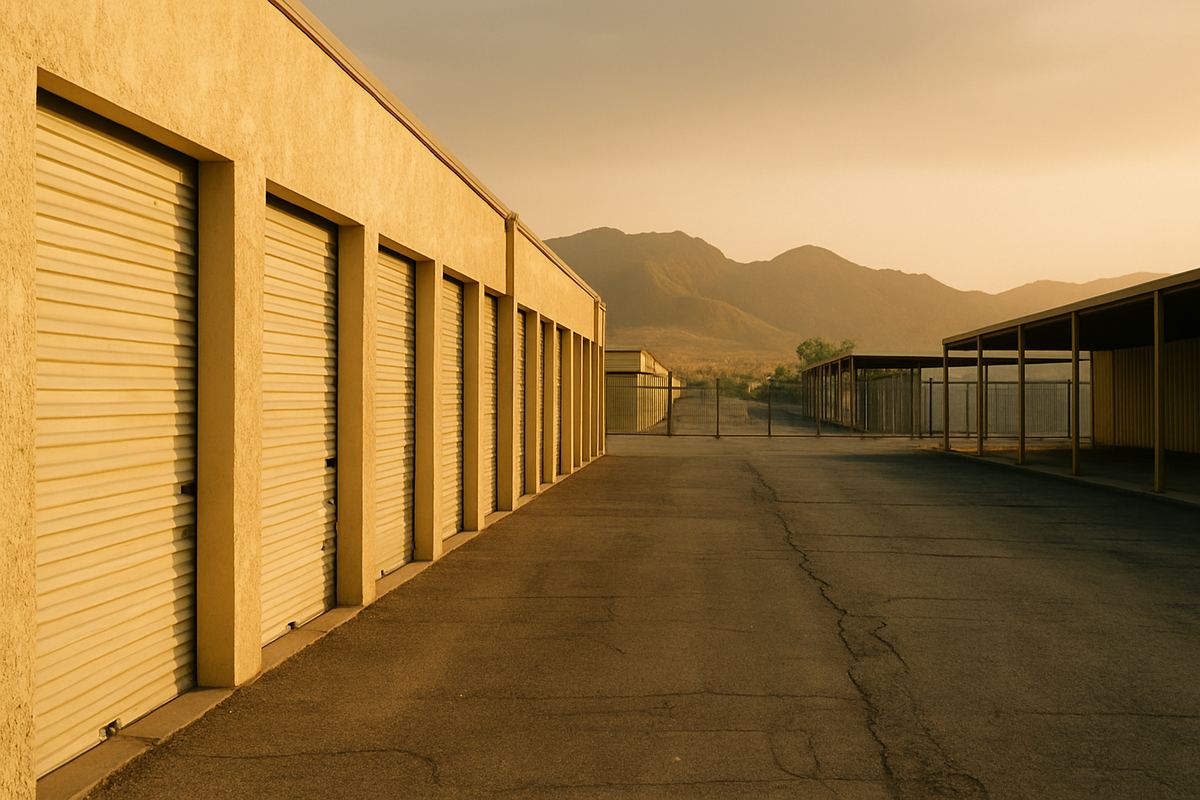
Summer heat bakes roll-up door springs and seals, chalks roof coatings and opens cracks in asphalt that are cheap to seal early and expensive to ignore. The monsoon window, roughly June through September, brings dust storms and flash flooding, so drainage, curb cuts and low corners of the lot get a hard look on any walk.
What a buyer walks first
Gate operators, keypad hardware, door tracks on the sun-facing rows, and the paving where trucks turn. None of it has to be fixed before a sale; a facility with worn doors, failing paving and tired roofs can be sold as-is. If a buyer plans to repave or build, soil disturbance at a quarter acre or more generally needs a county dust control operating permit, and that cost gets priced in.
Freeway position and the neighboring submarkets
Visibility from I-15, US-95 or the 215 Beltway helps a facility pull from beyond its immediate neighborhood. Sites tucked behind retail on surface streets depend more on rooftops within a short drive. Across the valley the picture shifts again: Henderson's retirement and master-planned demand to the southeast, North Las Vegas near Nellis and the northern Beltway, and over the Spring Mountains on SR 160, Pahrump's rural, large-lot storage market.
Competition from new construction
Newer climate-controlled buildings in growth areas often launch with move-in specials. An older drive-up site nearby can still hold value, but in-place rates and street rates usually tell different stories, and a buyer will compare both.
Moving from decision to closing
Most sellers here fall into a few patterns: an owner who has run the place for years and wants out, partners who no longer agree, or heirs. The retiring owner-operator situation is the most common. Whatever the reason, the steps are the same and are laid out in our direct-sale process. You choose the closing date, nothing needs repairing or cleaning, and a direct sale carries no agent commission. Comparing Las Vegas with the rest of the state? Start at the Nevada storage markets overview.
Asked Often About This
Q.01My facility has a Las Vegas address but is in unincorporated Clark County. Does that change the sale?
The sale itself works the same way, but the paperwork a buyer reviews comes from different offices. Business licensing, land-use history and any approvals for expansion sit with Clark County rather than the City of Las Vegas. Knowing which jurisdiction applies early keeps due diligence moving and avoids surprises when a buyer checks the zoning record or permit history.
Q.02Do I need to fix monsoon or heat damage before selling?
No. We buy facilities as-is, including sites with sun-damaged doors, cracked paving, roof wear or drainage problems from summer storms. A buyer will account for those items in the offer, but you do not need to hire contractors, pull permits or clean out abandoned units first. Telling us what you already know about the property simply makes the evaluation faster.
Q.03Does a high delinquency rate make a Las Vegas facility hard to sell?
It affects value, but it does not stop a sale. Churn from a renter-heavy, shift-working population can push delinquency up, especially if lien notices and auctions have not been handled consistently. A buyer will want to see the rent roll, the aging report and how the lien process has been run so far. Messy records are common and fixable.
Q.04Can I sell just the excess land next to my facility?
Often, yes. A vacant pad or unfinished expansion phase can be sold with the operating facility or on its own, depending on how the parcels are split and what the zoning allows. In unincorporated areas that history lives with Clark County. We look at the existing entitlements, access and utilities before discussing what a sale of the land alone would look like.