Reno-Sparks Storage: High Desert, Four Seasons, Fast Growth
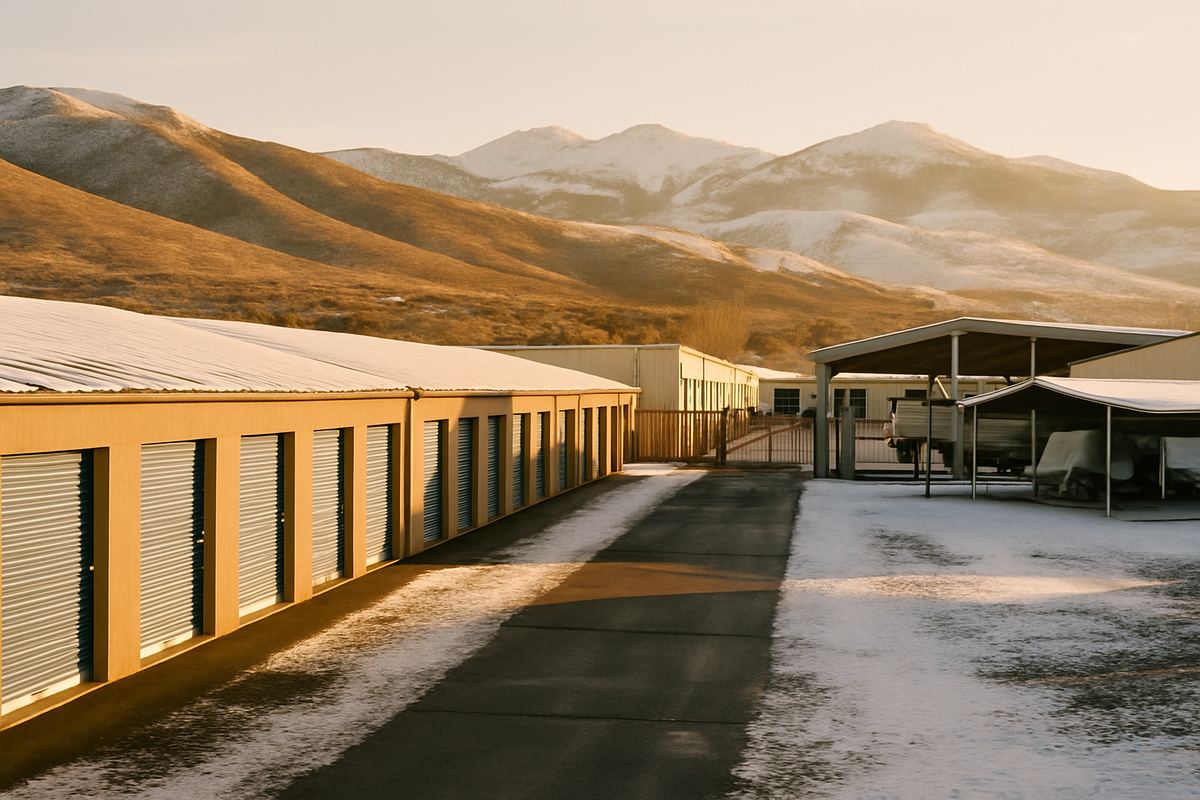
Northern Nevada storage faces conditions the southern half of the state never sees: snow on the roofs, freeze-thaw in the pavement and a jobs boom pushing new rooftops in every direction the mountains allow.
- Buyer
- Direct, cash
- Condition
- Purchased as-is
- Repairs
- None asked of you
- Commission
- None on a direct sale
- Closing
- The date you choose
- Footprint
- Nevada only
Jobs to the east, homes to the north
The Tahoe Reno Industrial Center in neighboring Storey County, reached via I-80 and USA Parkway, has drawn major manufacturing and distribution employers. Workers relocating for those jobs, and the shortage of housing near them, push demand for storage across the Truckee Meadows.
Spanish Springs and the Pyramid Highway
Much of the new residential building has gone north and east of Sparks into Spanish Springs, where the Pyramid Highway is the main artery and congestion has become a regional issue. Facilities with good access from that corridor see a steady stream of new households.
North Valleys along US-395
North of Reno, subdivisions along the US-395 corridor have filled in more slowly but in the same direction. Some of that growth is in unincorporated Washoe County rather than either city.
Three governments in one metro
| Jurisdiction | Where it applies | Why it matters on a sale |
|---|---|---|
| City of Reno | Central Reno, the university area, south Reno | City zoning and business license file |
| City of Sparks | Sparks proper and parts of the eastern Truckee Meadows | Separate city planning and permits |
| Washoe County | Unincorporated pockets including much of Spanish Springs | County zoning for expansion questions |
An owner thinking about selling a vacant pad or a stalled phase should know which column the land falls into; the page on selling storage expansion land and pads explains why that matters.
Put the Facility in Front of a Direct Buyer
Send the address and whatever basics you have on hand. We read it, call with a handful of questions about the operation, and only after that talk about price. Sending this does not commit you to anything.
Handy to have nearby, though nothing is required to begin:
- Approximate unit count and the mix of sizes
- A recent rent roll or occupancy report
- The last twelve months of income and expenses
- Which management software and gate system the site runs
Would rather talk it through? The red TALK TO ALEX button connects you to our line.
What winter and wind do to a facility
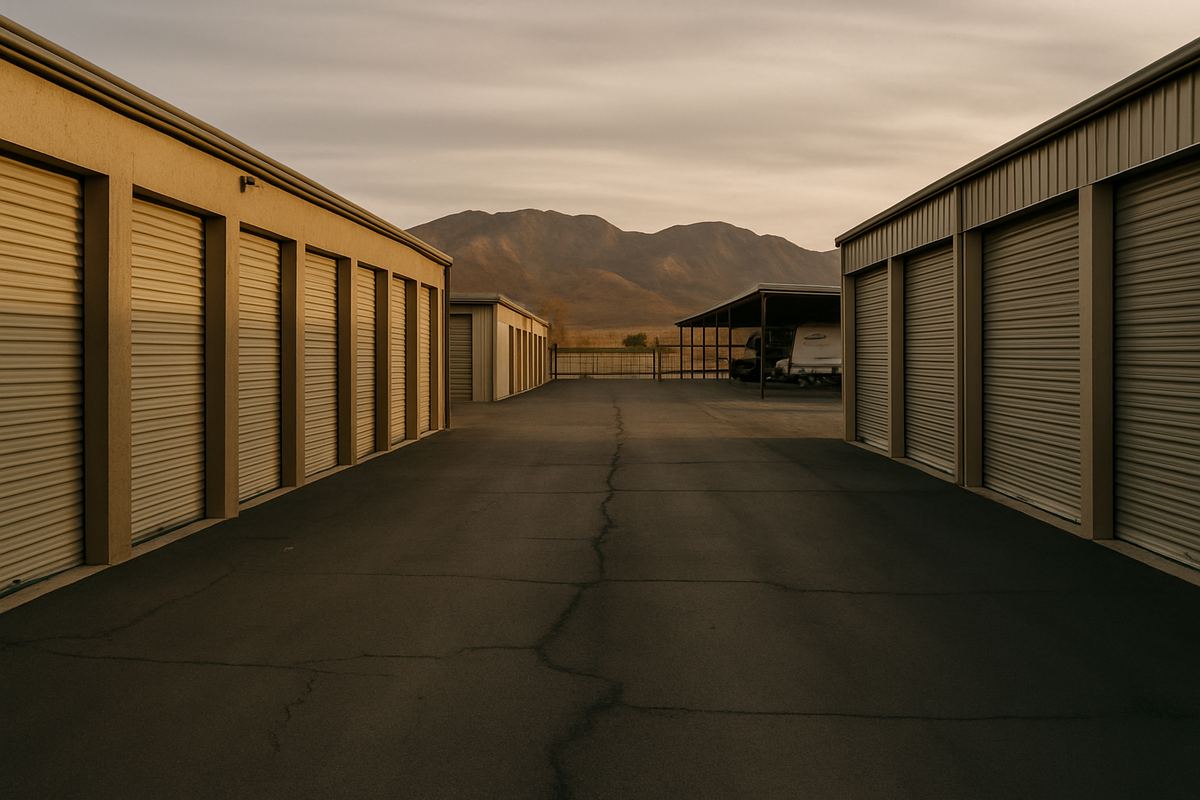
Reno sits in the high desert east of the Sierra Nevada, so snow and hard freezes are normal. Snow removal on drive aisles, ice at gate pedestals, roof loads on older metal buildings and freeze-thaw cracking in asphalt are maintenance items Southern Nevada owners never think about.
The Washoe Zephyr
In summer, the Washoe Zephyr, a gusty west to southwest wind that builds in the afternoon and runs into the evening, rattles doors and pushes dust and debris into tracks. Combined with winter wear, it is why buyers in this market look hard at door and roof condition. A facility carrying overdue door, roof and paving work can still be sold as-is.
Heated and climate-controlled space
Winter cold makes climate-controlled units more than a premium feature for tenants storing electronics, documents, instruments or anything that cracks when frozen. Heated buildings carry real utility and maintenance costs, and a buyer reviewing the expense side will look at HVAC age and how the building envelope has held up to snow and wind.
Older facilities in a newer market
Some of the oldest storage buildings in the metro sit near central Reno and the original Sparks industrial areas. They often run on legacy software or none, with in-place rates that never kept up with the region's growth. That gap, along with collection problems, is typical of an under-managed or under-rented facility and is often what draws a buyer.
University move-outs and rental turnover
Near the University of Nevada, Reno, the academic calendar drives short bursts of move-ins and move-outs as students leave for the summer or change apartments. Facilities in that orbit see predictable spikes and a steady flow of small units, and their rent rolls tend to show more turnover than suburban sites.
Farther out, families moving into new subdivisions, contractors keeping tools between jobs and people relocating for work in Storey County fill the larger units.
Many of those older sites are still run by the people who built them, and an owner in that position can read about stepping away after years at the counter. Practical questions about records and timing are collected in the seller questions page.
Heading south to the capital, and selling
I-580 links Reno with Carson City's consolidated city-county storage market roughly half an hour south. Wherever you are in the region, the direct-sale process means the units stay as they are, no broker commission is owed, and the owner sets the closing date. For the rest of the state, visit Nevada storage markets.
Asked Often About This
Q.01Does snow damage on roofs or paving have to be fixed before selling?
No. Snow load wear, ice damage at gates and freeze-thaw cracking in asphalt are all common in the Truckee Meadows and are accounted for in our offer on the property as it stands. Hiring contractors before a sale is not necessary. A list of known problems and any past repair dates helps a buyer evaluate the property more quickly and accurately.
Q.02My facility is in Spanish Springs. Is that Reno, Sparks or Washoe County?
It depends on the parcel. Parts of the Spanish Springs area are within Sparks, while much of it is unincorporated Washoe County. The jurisdiction determines which office holds your zoning, license and permit history. Your property tax bill or the county assessor's records will show it, and a buyer will confirm it during due diligence.
Q.03Can I sell an older Reno facility running on paper records?
Yes. Older facilities near central Reno and Sparks sometimes operate with minimal software. A buyer will reconstruct occupancy, collections and delinquency from leases, deposits and whatever ledgers you have. Messy or incomplete records slow the process slightly but do not prevent a sale, and they are a common reason owners choose a direct buyer.