Selling an RV and Boat Storage Yard in Nevada
Outdoor storage looks simple: a fenced lot, a gate and rows of rigs. Owners know better. Access, surfaces, power and the occasional abandoned fifth-wheel all shape what the yard is worth.
- Buyer
- Direct, cash
- Condition
- Purchased as-is
- Repairs
- None asked of you
- Commission
- None on a direct sale
- Closing
- The date you choose
- Footprint
- Nevada only
Outdoor storage is its own business
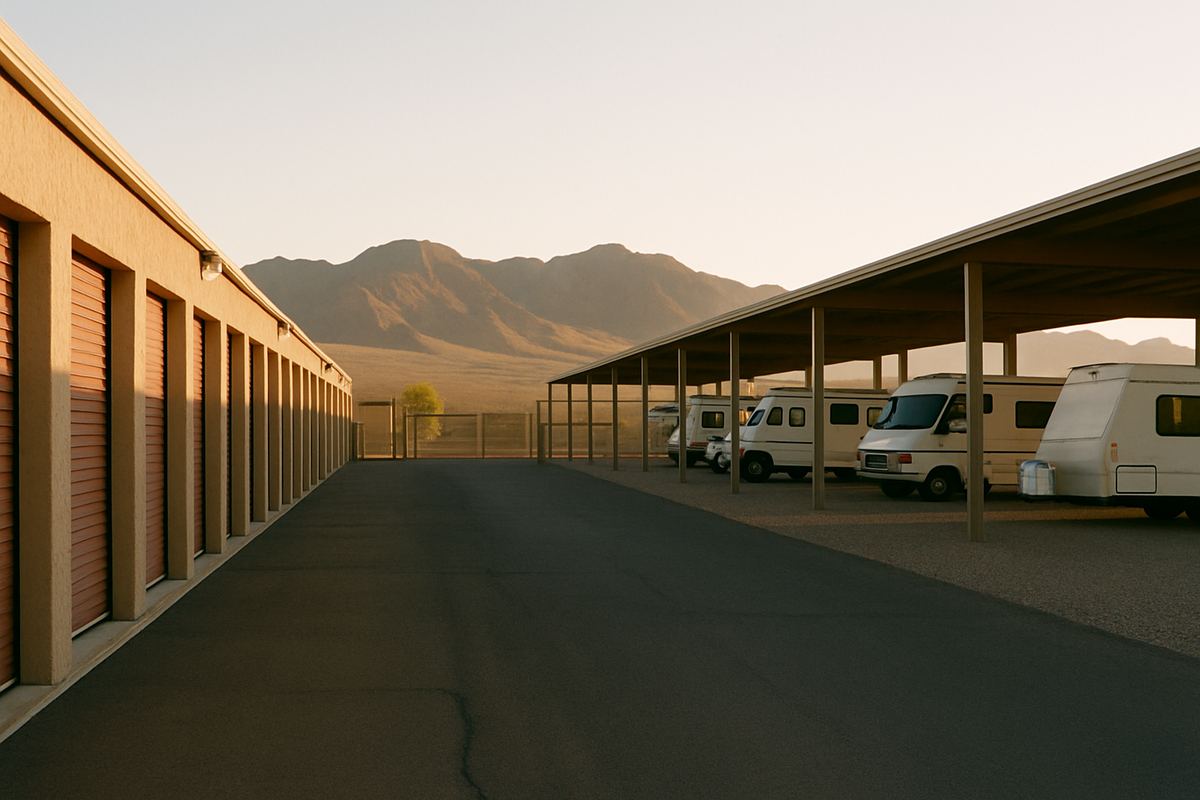
An RV and boat yard has fewer doors to fix than a mini-warehouse, but it brings different questions. Tenants arrive towing long trailers, need wide turns and want to pull out at dawn on a holiday weekend. Spaces are measured by length, and covered spots rent very differently from open ones.
Open lots, canopies and enclosed bays
Most yards mix uncovered parking, steel canopies and sometimes enclosed bays with tall doors. Canopy structures age with wind and sun, and enclosed bays need their own door and roof maintenance. A buyer will look at the mix and the condition of each.
Gravel versus paved
Gravel lots are cheaper to build but can rut, wash out in storms and create dust. Paved or chip-sealed lots cost more to maintain but present better. Neither is wrong; both affect what a buyer plans to spend.
Turning radius, aisle width and gate clearance
A yard that is hard to navigate frustrates tenants with large rigs. Narrow aisles, tight gate approaches and low overhead clearances limit who the yard can serve.
Power, dump stations and wash bays
Amenities like battery-charging outlets, a dump station or a wash area can set a yard apart, but they also bring utility, permit and upkeep questions.
Long-term tenants and seasonal swings
Outdoor storage tenants tend to stay put once they find a spot that fits their rig, which makes the rent roll steadier than many owners expect. Demand can still shift with the seasons and with fuel prices, and some tenants pull their rigs out for weeks at a time while still paying. A buyer will want to see how long your tenants have stayed, how often spaces turn over and whether covered spots carry a waiting list or sit empty.
Abandoned vehicles, boats and trailers
Every outdoor yard eventually has a rig that stops paying. Nevada's storage lien statute treats motor vehicles, boats, personal watercraft and the trailers that haul them as personal property covered by the owner's lien, so the same notice rules that apply to a ten-by-ten full of furniture apply to a motorhome.
The towing provision for vehicles and boats
Under NRS 108.4763, part of Nevada's storage lien law, when charges on that kind of property remain unpaid for 60 days, the owner may have it towed by a tow operator subject to the Nevada Transportation Authority. Many yard owners use that option rather than auctioning a large rig on site.
Titles bring a second set of paperwork
Vehicles and vessels carry titles and sometimes lenders. Vehicle lien sales generally run through the Nevada DMV's lien sale process, and registered boats are titled through the Nevada Department of Wildlife. A lender with a recorded title lien may have priority over the storage lien for that vehicle or boat. This is general information, not legal advice.
If your yard has a row of rigs that nobody has touched in a long time, you do not have to resolve them before selling. Tell us what is there and where each file stands. A simple list of space numbers, rig descriptions and the date each account stopped paying is enough to start.
Put the Facility in Front of a Direct Buyer
Send the address and whatever basics you have on hand. We read it, call with a handful of questions about the operation, and only after that talk about price. Sending this does not commit you to anything.
Handy to have nearby, though nothing is required to begin:
- Approximate unit count and the mix of sizes
- A recent rent roll or occupancy report
- The last twelve months of income and expenses
- Which management software and gate system the site runs
Would rather talk it through? The red TALK TO ALEX button connects you to our line.
Where outdoor storage demand comes from in Nevada
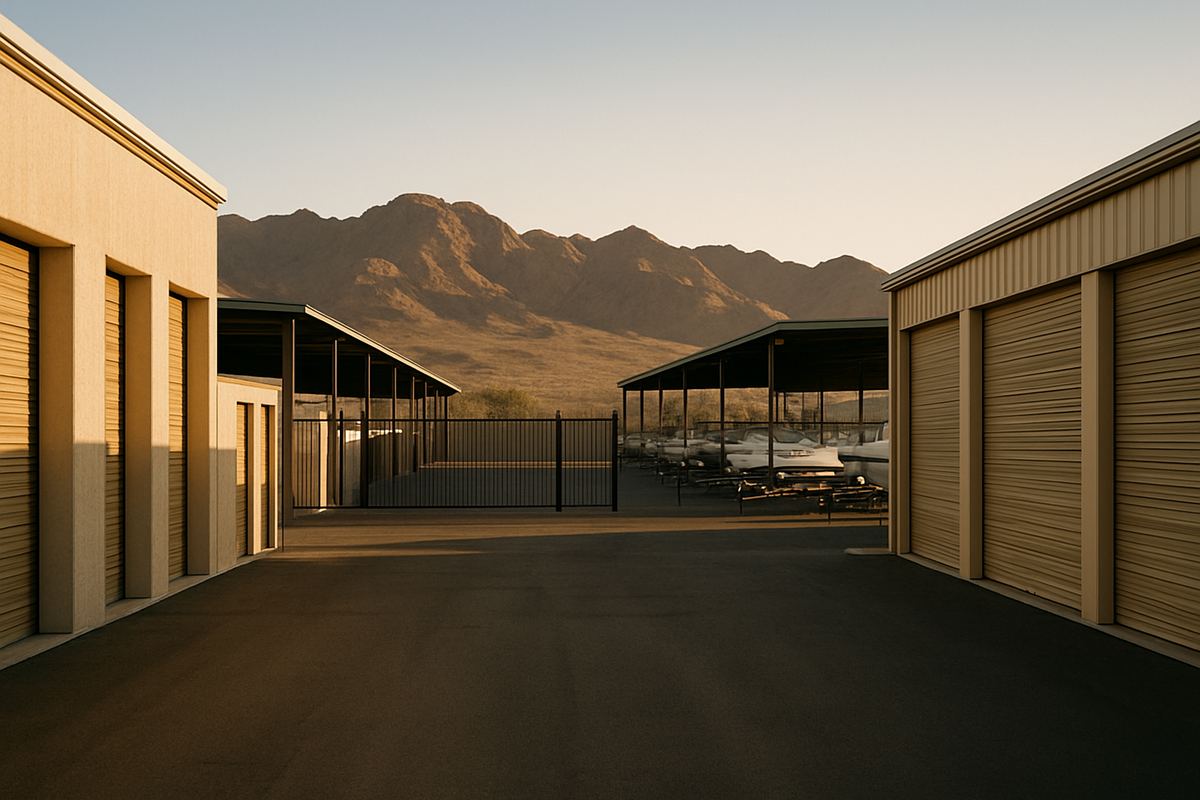
Nevadans tow toys. Lake Mead and Lake Mohave draw boaters from southern Nevada, and northern Nevada owners head toward Lake Tahoe and Pyramid Lake. Off-road trailers, travel trailers and motorhomes are part of desert life. At the same time, many newer master-planned neighborhoods have HOA rules limiting RV and boat parking at home, which pushes owners toward storage yards. Yards in Pahrump, where lots are larger and rules looser, the Mesquite area near the Arizona and Utah lines and Boulder City near the lake each serve a different mix of tenants.
Security weighs heavily for these tenants. A boat or motorhome is often the most valuable thing a household owns after the house, and owners ask about fencing, lighting, cameras and who can get through the gate. A yard with a dependable gate system and good lighting is easier to keep full than one with a manual padlock and a dark back row.
Selling the yard, step by step
- Map what you have. Number of spaces by type, covered versus open, and any enclosed bays or amenities.
- List the problem units. Abandoned rigs, title questions and accounts in the lien process.
- Walk the yard with us, including the gate approach, aisles, surfaces and canopies.
- Review a cash offer for the yard as-is, with any abandoned vehicles and boats still on site.
- Pick your closing date and close through a title company.
Yards attached to other plans
Some RV yards started as temporary use on land meant for future buildings; if that describes yours, our page on expansion pads and unused storage acreage may fit. Yards that have struggled to fill or collect share a lot with underperforming mini-warehouse facilities, and worn canopies and rutted gravel fall under deferred maintenance we buy as-is. For the overall sequence, read how our direct purchase process runs or browse storage seller questions and answers.
Asked Often About This
Q.01Will you buy a yard with abandoned RVs or boats still on it?
Yes. Abandoned rigs are common in outdoor storage. Tell us which ones are in a lien process, which have title questions and which have simply stopped paying. We account for them in the offer. You do not need to tow, auction or title every abandoned vehicle before you sell.
Q.02Is a gravel RV lot harder to sell than a paved one?
It is different, not necessarily harder. Gravel costs less up front but needs regrading and can wash out after storms, while paving costs more to maintain. A buyer considers the surface along with drainage, access and the local rules for that site. We buy both kinds as they are.
Q.03Do you buy yards that are part of a larger mini-warehouse facility?
Yes. Many Nevada facilities combine drive-up units with an outdoor parking area or canopy rows. We can buy the whole property together, or talk about the outdoor portion if it sits on a separate parcel. Separate parcels and zoning are things to confirm early.