Pahrump Storage Owners: Selling in Nye County
Pahrump is an unincorporated Nye County town about an hour west of Las Vegas over the Spring Mountains. Its storage market looks nothing like the valley's: big lots, lots of toys, and many small facilities run by the people who built them.
- Buyer
- Direct, cash
- Condition
- Purchased as-is
- Repairs
- None asked of you
- Commission
- None on a direct sale
- Closing
- The date you choose
- Footprint
- Nevada only
No city hall, one regional planning district
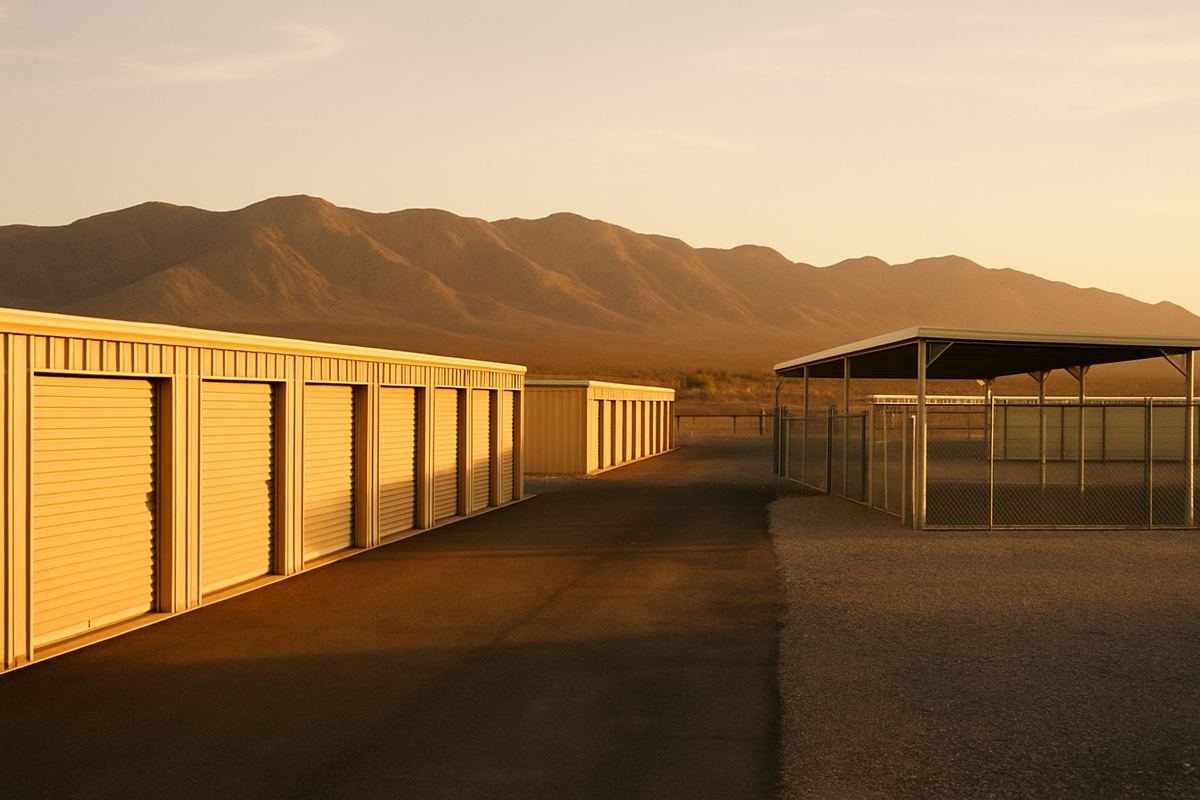
Pahrump has no city government. Land use falls under the Pahrump Regional Planning District, whose zoning ordinance is Title 17 of the Nye County Code. The Pahrump Regional Planning Commission, appointed by the county commissioners, decides many land-use applications, and the Board of County Commissioners has the final word on appeals. A buyer reviewing your site checks that file rather than a city one.
Rural zoning and what got built under it
Some local facilities started as a few metal buildings on a larger parcel and grew one row at a time. That is common and sellable, but a buyer will want to match what is on the ground to what the county approved.
Why people here rent storage
Big lots, bigger toys
Typical residential parcels run an acre or more, and rural zoning allows horses, shops and RV parking at home. That sounds like it would kill storage demand, yet the same lifestyle brings motorhomes, trailers, side-by-sides and hobby equipment that outgrow even a large lot, or need security a fenced yard cannot give. If outdoor spaces make up most of your rent roll, the page on selling an RV and outdoor storage yard is closer to your situation.
Retirees and part-time residents
No state income tax and lower ownership costs draw retirees from California and the Las Vegas valley. Many keep belongings in storage during a move, a downsizing or a season spent elsewhere.
Put the Facility in Front of a Direct Buyer
Send the address and whatever basics you have on hand. We read it, call with a handful of questions about the operation, and only after that talk about price. Sending this does not commit you to anything.
Handy to have nearby, though nothing is required to begin:
- Approximate unit count and the mix of sizes
- A recent rent roll or occupancy report
- The last twelve months of income and expenses
- Which management software and gate system the site runs
Would rather talk it through? The red TALK TO ALEX button connects you to our line.
The road over the mountains
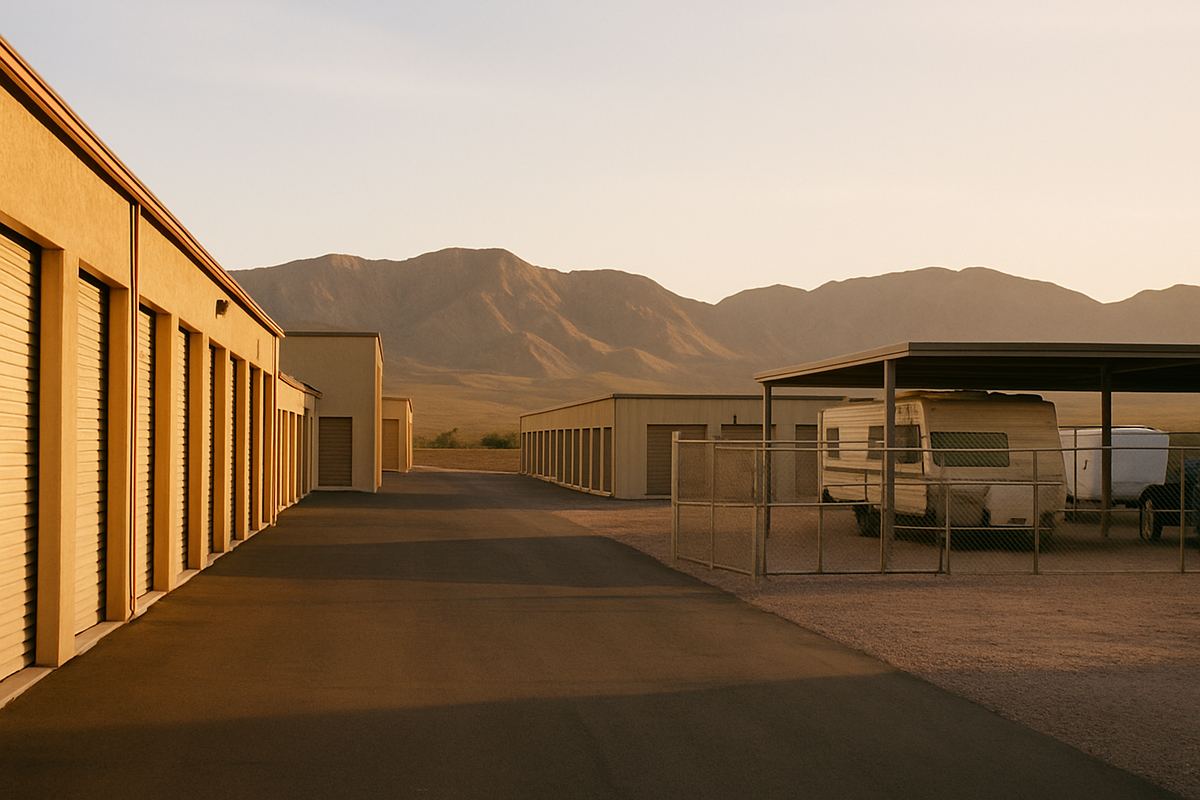
SR 160 is the lifeline between Pahrump and the Las Vegas valley storage market, and the grade over the Spring Mountains can see snow in winter. Facilities on or near the highway catch commuters and people hauling equipment; sites tucked into residential grids rely on neighbors. SR 372 heads west toward the California line and the Death Valley side of the desert.
Wind, dust and gravel
The open valley floor takes wind hard, and dust works into door tracks, gate motors and keypads. Many facilities have gravel or unpaved drive aisles that are serviceable but get noted on any inspection, alongside roof fasteners on older metal buildings. Owners with doors, paving and roofs behind on maintenance do not need to fix them before selling.
Running a small rural facility
Many Pahrump facilities are mom-and-pop operations: an owner who lives on site or nearby, paper or basic software, and a handful of tenants paid in cash or by check. A buyer from outside the area will ask how rents are tracked, how gate codes are issued and whether lien notices have followed the state process.
Records you already have are enough
A notebook ledger and a stack of leases is a starting point. We work from what exists.
Utilities and the manager's house
Some rural facilities include an on-site residence for the owner or a manager, and outlying parcels may rely on a private well or septic system rather than municipal service. A buyer will ask about those systems, about power to the gate and lighting, and about whether the house is being sold with the business. None of that needs to be sorted out before you call.
If rents have drifted below what the market will bear or late accounts have piled up, the page about a facility with slipping occupancy and collections explains how buyers look past it. Owners with general questions about timing, records or how an as-is offer is built can check answers for storage sellers first.
When the owner is ready to stop
The most common reason a Pahrump facility comes up for sale is simple: the person running it wants to retire and nobody in the family wants the keys. The retiring owner-operator page walks through that, and the direct-sale steps show how a closing comes together without repairs, cleaning or an agent commission. For other parts of Nevada, see all Nevada storage markets.
Asked Often About This
Q.01My facility grew in stages without much paperwork. Can I still sell it?
Yes. Small facilities in rural Nye County often expanded one building at a time. A buyer will compare what exists with what the county has on file through the Pahrump Regional Planning District. Gaps can usually be researched during due diligence. Bring whatever you have, such as old site plans, permits or photos, and we will start from there.
Q.02Is an outdoor RV and trailer yard in Pahrump worth selling on its own?
It can be. Outdoor storage on rural land is common here, and buyers evaluate it based on fencing, gate access, surface condition, space layout and whether the zoning supports the use. Some owners sell the yard with an adjacent enclosed facility, others sell it separately. The right structure depends on how the parcels are recorded.
Q.03I track rent in a notebook and take cash. Does that scare buyers?
It slows things down a little but rarely stops a sale. A buyer will reconstruct occupancy and collections from leases, deposits and your records. The more consistent the trail, the easier the review. Having current tenant contact information and knowing who is behind on rent is the most useful thing you can prepare.