Partnership Splits and 1031 Timing on a Storage Sale
Some sales are driven by people, not property. Partners want different things, or an investor needs a sale to land inside an exchange calendar. Either way, certainty matters.
- Buyer
- Direct, cash
- Condition
- Purchased as-is
- Repairs
- None asked of you
- Commission
- None on a direct sale
- Closing
- The date you choose
- Footprint
- Nevada only
When co-owners stop seeing the facility the same way

Storage facilities are often owned by small groups: two friends who built a site together, a few family members, or investors who pooled money with one operating partner. Over time goals diverge. One partner wants to refinance and hold, another wants to cash out, and a third has stopped answering emails.
Buy-sell clauses and operating agreements
Start with the documents. Many operating agreements spell out who can force a sale, how a partner's share is valued and what notice is required. Some include a right of first refusal for the other partners. Reading those terms with counsel before talking to buyers saves arguments later.
One partner runs it, the others collect distributions
When one person handles the day-to-day while others are passive, tension builds around effort and pay. A clean sale of the whole facility lets everyone exit at the same time and on the same terms, which is often easier than negotiating a buyout among people who no longer agree.
Selling on an exchange calendar
Some sellers want to roll proceeds into other real estate through a like-kind exchange under Internal Revenue Code section 1031. We are not tax advisors and this is not tax advice. The general rules below come from public IRS guidance, and your CPA and qualified intermediary should guide every decision.
The identification and exchange windows
Under the IRS rules, replacement property generally must be identified in writing no later than 45 days from the transfer of the property you sell, and the purchase completed within 180 days or by your tax return's due date including extensions, whichever comes first. The IRS treats those deadlines strictly, with narrow exceptions such as presidentially declared disasters.
Proceeds held by a qualified intermediary
In a typical deferred exchange the seller does not take receipt of the sale proceeds. A qualified intermediary holds the funds between the sale and the purchase. That intermediary needs to be engaged before closing, so line it up early.
A partnership interest is a different animal
Section 1031 applies to real property held for business or investment use. Interests in a partnership are excluded, so partners who want different outcomes cannot each simply exchange their share. Groups in this position need careful planning with their advisors well before a sale.
A storage facility is generally the kind of property section 1031 is written for when it is held for business or investment use, but whether a particular sale qualifies depends on facts only your advisors can review. Treat every point above as a starting question for them, not an answer.
Put the Facility in Front of a Direct Buyer
Send the address and whatever basics you have on hand. We read it, call with a handful of questions about the operation, and only after that talk about price. Sending this does not commit you to anything.
Handy to have nearby, though nothing is required to begin:
- Approximate unit count and the mix of sizes
- A recent rent roll or occupancy report
- The last twelve months of income and expenses
- Which management software and gate system the site runs
Would rather talk it through? The red TALK TO ALEX button connects you to our line.
What a direct buyer brings to a time-sensitive sale
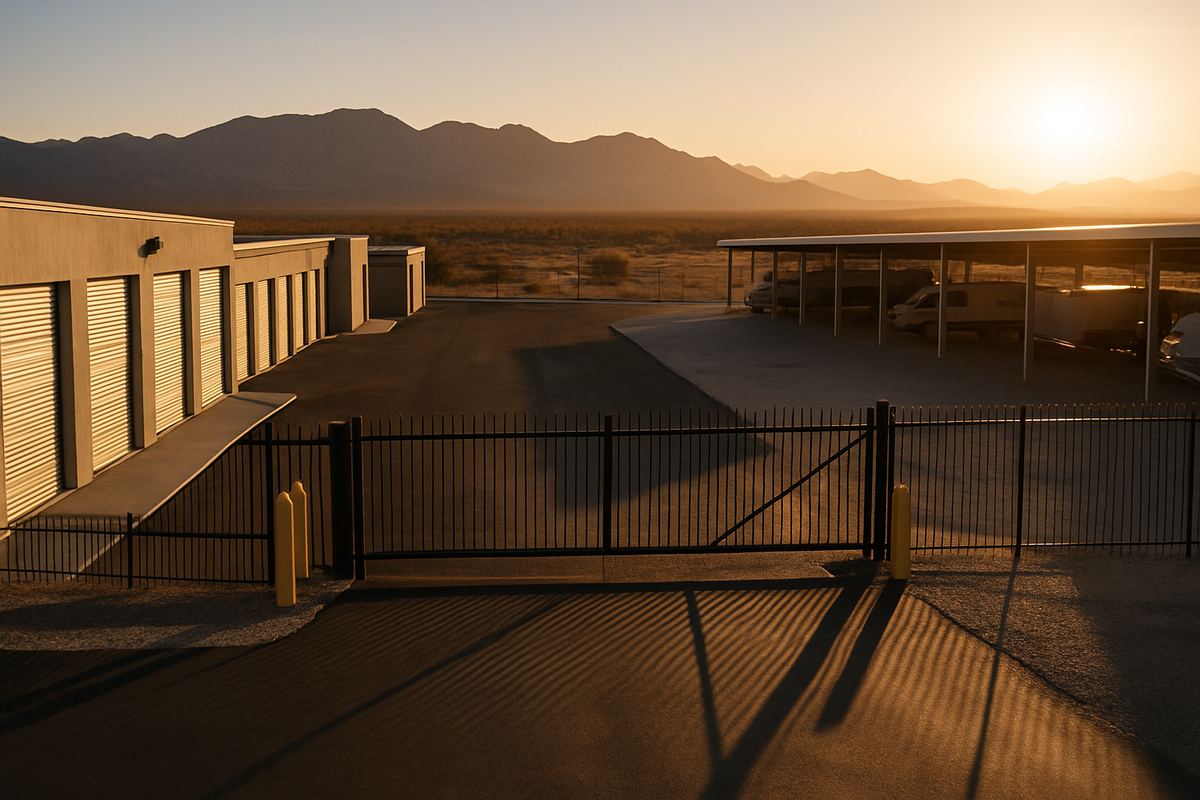
When a calendar or a fragile partner agreement is driving the sale, the biggest risk is a buyer who drags out due diligence or walks away late. We buy for cash, as-is, with no repair requests, and you choose the closing date. That lets partners plan around a single known date, and it lets an exchanging seller coordinate the sale with replacement property work. A direct sale also means no agent commission on that transaction.
When partners disagree on price
Partners often argue about value because each one is looking at a different number: the price someone heard a nearby facility sold for, a broker's opinion or what the facility might be worth after a turnaround. A single written offer, presented to every owner at the same time, gives the group something concrete to accept or reject. It does not settle every disagreement, but it narrows the debate.
Keeping the sale quiet
A drawn-out public marketing process can unsettle an on-site manager and even tenants. A direct conversation keeps the sale private until the owners decide to share it.
The same need for a firm date shows up when siblings inherit a facility together or when an owner-operator plans a retirement exit. Partners holding unbuilt acreage alongside the facility may also want to read about selling excess land or a stalled expansion phase.
Steps for a partner buyout or exchange-driven sale
- Get the owners aligned on selling. Confirm who has authority to sign under the operating agreement or title.
- Bring in your advisors early. Your CPA, attorney and, if exchanging, a qualified intermediary before any contract is signed.
- Share the facility records. Rent roll, deposits, rental agreement forms and any open lien files.
- Review a written offer together so every partner sees the same terms at the same time.
- Set the closing date that works for the partners or the exchange plan, and close through title.
Questions to put to your own advisors
How will the sale be reported? Does the operating agreement require a vote or written consent? If one partner wants to exchange and another wants cash, what structures are available, and how long do they take to set up? These are questions for your CPA and attorney, not for a buyer. Once you have answers, we can work inside the plan. We buy across Nevada, including facilities throughout Henderson, sites in the Truckee Meadows around Reno and Sparks and properties in and near Carson City. You can preview each step of selling a facility directly or check what other storage sellers usually ask.
Asked Often About This
Q.01Can you close on a specific date to fit my exchange?
The closing date is the owner's call, and we coordinate that date with the escrow officer. We cannot promise how fast any sale will close, and we do not give tax advice. Coordinate the date with your qualified intermediary and CPA so the sale fits the identification and exchange periods in your plan.
Q.02What if one partner will not agree to sell?
That is a legal question about your operating agreement and how title is held, and it is one for your attorney. Some agreements let a majority force a sale or allow a buyout; others do not. We can present an offer to all owners at once, but we will not push one partner against the others.
Q.03Do you buy only the facility, or also partner shares?
We buy storage real estate: the facility, and sometimes the land around it. How partners divide the proceeds, or whether one partner buys out another first, is something the owners and their advisors decide. A clean sale of the whole property is often the simplest route for a group.