Selling a Storage Facility That Is Not Pulling Its Weight
A facility can look full from the road and still disappoint at the bank. When occupancy, rates or collections have slipped, a direct as-is sale is one way out.
- Buyer
- Direct, cash
- Condition
- Purchased as-is
- Repairs
- None asked of you
- Commission
- None on a direct sale
- Closing
- The date you choose
- Footprint
- Nevada only
Underperformance comes in a few shapes
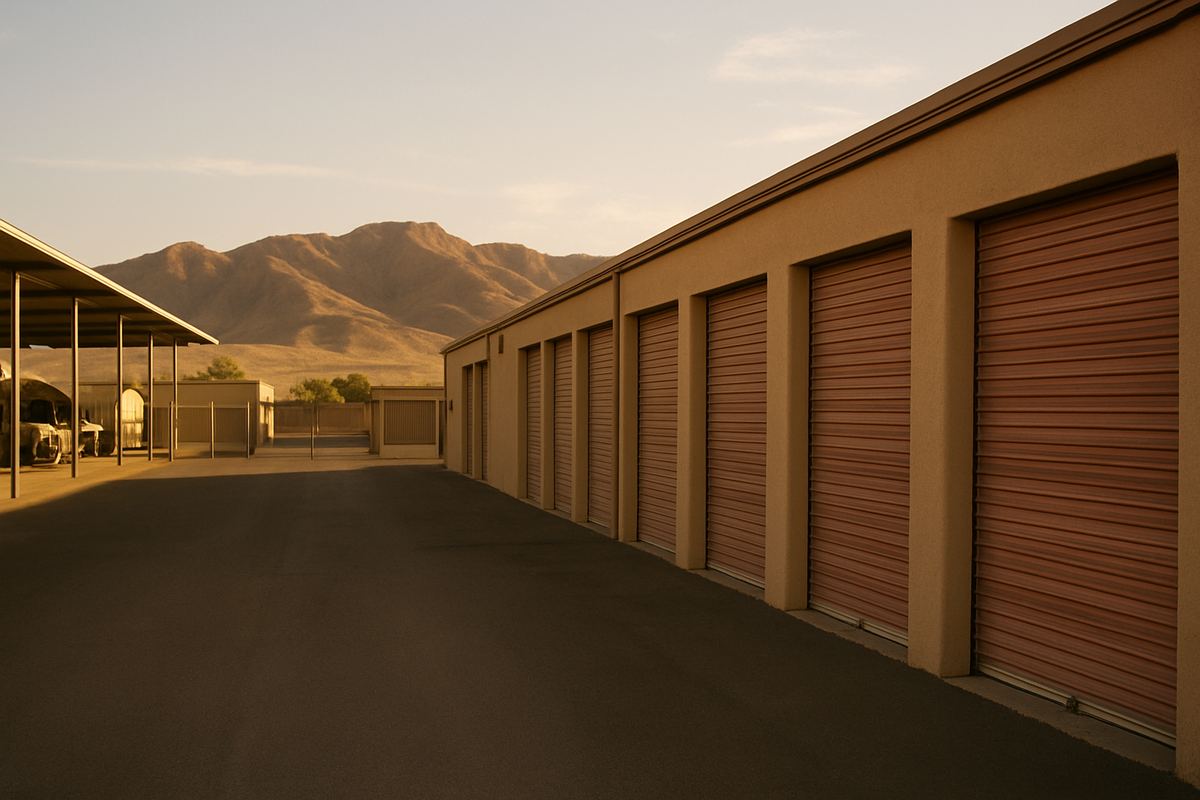
Owners describe a struggling facility in different ways, but the causes tend to fall into a handful of patterns. Most underperforming sites have two or three of these at once.
Units rented, money missing
Physical occupancy counts rented units. Economic occupancy measures what you actually collect against what those units could earn at current rates. A facility can show nearly every door locked while economic occupancy lags, because of discounts that never expired, long-term tenants at old rates, free months and accounts that are rented on paper but not paying.
In-place rates that never moved
When street rates rise and existing tenants never see an increase, the gap widens every year. Some owners avoid increases because they dislike the conversation or fear move-outs. The result is a rent roll that understates what the property could do under active management.
A delinquency list that keeps growing
Nevada's lien statute gives owners tools: under NRS 108.476 an owner may deny access once charges are unpaid for a period set in the statute and may terminate the right to use the unit after sending written notice. Those tools only help if someone uses them consistently. When notices stop going out, past-due accounts pile up, and units that could be re-rented sit full of property nobody is paying to store.
The cleanup is slow by design. Before a lien sale, Nevada requires a notice of sale sent at least fourteen days ahead, an opportunity for the tenant to return a declaration in opposition, and an advertisement in a newspaper of general circulation in the week before the sale. Done correctly, the process protects the owner. Done carelessly, it invites disputes. Many owners would rather hand the whole file to a buyer.
Why some owners sell instead of fixing it
Management drifted
A manager leaves and is not replaced well, a third-party management contract stops producing, or the owner simply has less time. Lead follow-up slows, online listings go stale, and the gate keypad has a dead button that has been dead for months.
Tenants shop online and nobody answers
Most storage renters now compare facilities on a phone before they ever drive by. A facility with no online rental option, outdated photos or a phone that rings unanswered after five o'clock loses those renters to competitors without ever knowing they called. Fixing that means new software, a reservation process and someone watching the leads every day.
New competition down the road
Newer climate-controlled facilities with bright offices and online rentals can pull tenants away from older drive-up sites. Competing means investing in software, marketing, security and sometimes the buildings themselves. Not every owner wants to make that bet.
The turnaround belongs to someone
Fixing an underperforming facility takes time, capital and attention: rate reviews, a clean-up of the delinquency file, lien sales done by the book, repairs and better marketing. Selling directly hands that work to a buyer who prices it in. It often goes hand in hand with a facility carrying deferred repairs, and it is a common last chapter for owners stepping back from day-to-day operations.
Put the Facility in Front of a Direct Buyer
Send the address and whatever basics you have on hand. We read it, call with a handful of questions about the operation, and only after that talk about price. Sending this does not commit you to anything.
Handy to have nearby, though nothing is required to begin:
- Approximate unit count and the mix of sizes
- A recent rent roll or occupancy report
- The last twelve months of income and expenses
- Which management software and gate system the site runs
Would rather talk it through? The red TALK TO ALEX button connects you to our line.
From a struggling facility to a closed sale
- Share the real numbers. A current rent roll, a delinquency report and recent deposits tell us more than a marketing summary.
- Flag what is in the lien pipeline. Note which units have received notices and where each file stands.
- Walk the site together. We look at vacant units, the gate and cameras, the office and the grounds as they are.
- Receive a written offer on the facility as it stands, based on the property you have today, not projections.
- Close on your schedule through a title company, on a date you pick.
What we promise and what we do not
We will not tell you a struggling facility is worth what a fully stabilized one would bring, and we will not invent a valuation formula. What we can offer is a cash purchase, no repair or clean-out demands on the operator, no broker commission and a closing date you control. Cap rates on storage move with the market and with the condition of each property, and an underperforming site reflects that risk. We would rather explain our reasoning plainly than dress it up.
We also will not ask you to fix anything first. You do not need to raise rates, chase delinquent tenants, replace the gate system or repaint the office before we make an offer. Keep running the facility the way you have been, keep collecting rent, and let the next owner take on the turnaround plan. That is the whole point of selling to a buyer who expects the work.
Facilities with large outdoor parking areas sometimes underperform because they were run like a mini-warehouse; our notes on outdoor RV and boat yards with similar issues cover that angle. We look at sites in North Las Vegas growth corridors, established Henderson neighborhoods, older drive-up corridors of Las Vegas and elsewhere in the state, where newer competitors have opened near older sites. Before you call, you may want to review what happens between the first call and closing and the seller FAQ for storage owners.
Asked Often About This
Q.01Should I clean up delinquency before selling?
You do not have to. If you choose to run lien sales before closing, follow Nevada's notice steps in NRS 108.473 through 108.4783 carefully, or ask an attorney, because a rushed sale can create disputes. Many owners simply disclose the delinquency report and let the buyer handle collections after closing. We price the facility with the delinquency it has.
Q.02My facility is mostly full. Why does it feel like it is underperforming?
The usual reason is the gap between physical and economic occupancy. If many tenants pay rates set years ago, or discounts never expired, a full facility can collect noticeably less than its units could earn. Comparing your in-place rates with your own current street rates is a quick way to see the gap.
Q.03Will you buy a facility with a third-party manager under contract?
Yes, though the management agreement needs to be reviewed. Many contracts have termination terms or notice periods. We look at the agreement with you so the handoff at closing is clean, and so neither you nor the manager is surprised by how it ends.